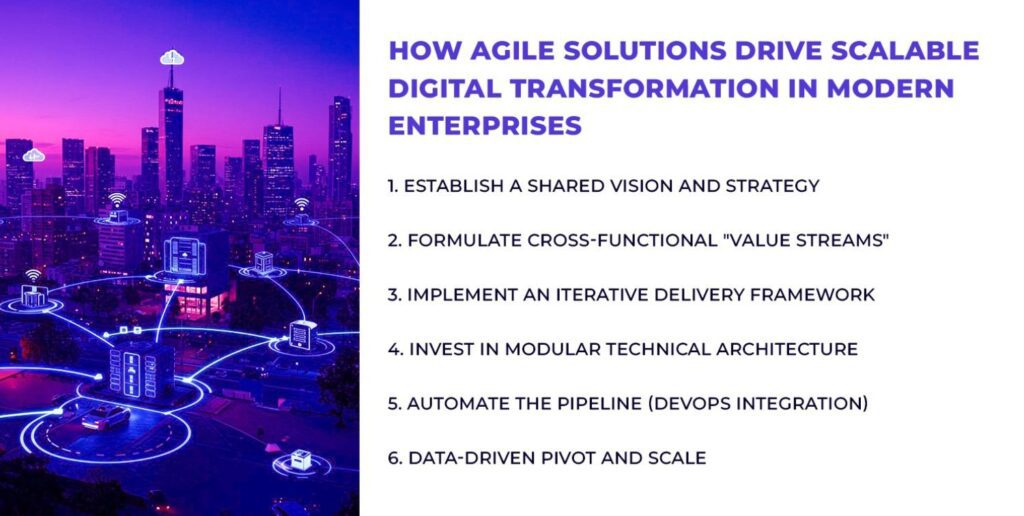
In today’s fast-paced digital landscape, enterprises are under constant pressure to innovate, adapt, and scale. Traditional business models and rigid IT systems are no longer sufficient to meet evolving customer expectations and market demands. This is where digital transformation scale agile solutions become essential.
Agile methodologies empower organizations to become more responsive, customer-centric, and scalable. By combining flexibility with structured execution, businesses can accelerate innovation while maintaining operational efficiency. In this blog, we’ll explore how agile solutions fuel scalable digital transformation and why partnering with a Leading IT Agency in USA can be a strategic advantage.
What is Digital Transformation in Modern Enterprises?
Digital transformation refers to the integration of digital technologies into all areas of a business, fundamentally changing how it operates and delivers value to customers.
Key Components of Digital Transformation
- Cloud computing and infrastructure modernization
- Data analytics and business intelligence
- Automation and AI-driven processes
- Customer experience optimization
- Agile development and DevOps practices
Why It Matters Today
Modern enterprises must adapt quickly to:
- Changing customer expectations
- Competitive digital disruption
- Rapid technological advancements
Without scalable systems and agile processes, digital transformation efforts often fail to deliver long-term value.
Understanding Agile Solutions in the Enterprise Context
Agile solutions are frameworks and methodologies designed to promote iterative development, collaboration, and continuous improvement.
Core Principles of Agile
- Customer-centric development
- Continuous feedback and iteration
- Cross-functional team collaboration
- Rapid delivery cycles
Popular Agile Frameworks
- Scrum
- Kanban
- SAFe (Scaled Agile Framework)
- Lean Development
These frameworks help organizations break down complex projects into manageable tasks, ensuring faster delivery and better outcomes.
The Role of Agile in Scaling Digital Transformation
Scaling digital transformation requires more than just adopting new technologies; it demands a shift in mindset, culture, and execution strategy.
1. Faster Time-to-Market
Agile enables teams to release products and features in shorter cycles, allowing businesses to:
- Respond quickly to market demands
- Test ideas with real users
- Reduce development risks
This speed is critical for enterprises aiming to implement digital transformation scale agile solutions effectively.
2. Enhanced Flexibility and Adaptability
Agile solutions allow organizations to pivot quickly when:
- Market conditions change
- Customer needs evolve
- New technologies emerge
Instead of rigid long-term plans, agile promotes adaptive planning and continuous improvement.
3. Improved Collaboration Across Teams
Agile fosters collaboration between:
- Development teams
- Marketing departments
- Business stakeholders
This alignment ensures that transformation initiatives are aligned with business goals and customer needs.
4. Data-Driven Decision Making
Agile environments rely heavily on:
- Real-time analytics
- Continuous feedback loops
- Performance metrics
This enables enterprises to make informed decisions and optimize processes during transformation.
Key Benefits of Digital Transformation Scale Agile Solutions
Implementing agile solutions at scale offers several strategic advantages:
Operational Efficiency
- Streamlined workflows
- Reduced redundancies
- Faster execution
Customer-Centric Innovation
- Continuous user feedback integration
- Personalized experiences
- Improved satisfaction rates
Scalability
- Easily adaptable systems
- Flexible infrastructure
- Sustainable growth
Risk Mitigation
- Early issue detection
- Iterative testing
- Reduced project failure rates
Challenges in Scaling Agile Across Enterprises
While agile offers numerous benefits, scaling it across large organizations comes with challenges.
1. Cultural Resistance
Employees may resist changes in workflows and responsibilities.
2. Lack of Skilled Talent
Agile requires experienced professionals who understand both technical and business aspects.
3. Integration with Legacy Systems
Older systems may not align with agile methodologies, creating bottlenecks.
4. Inconsistent Implementation
Without a unified approach, agile practices can become fragmented across teams.
Best Practices for Implementing Agile at Scale
To successfully implement digital transformation scale agile solutions, enterprises should follow these best practices:
1. Start with a Clear Strategy
Define:
- Business objectives
- Transformation goals
- Success metrics
2. Invest in Agile Training
Equip teams with:
- Agile certifications
- Workshops and coaching
- Hands-on experience
3. Leverage Scaled Agile Frameworks
Use frameworks like SAFe to ensure consistency across teams and departments.
4. Focus on Continuous Improvement
Regularly evaluate:
- Performance metrics
- Team productivity
- Customer feedback
5. Adopt Modern Technology Stacks
Use:
- Cloud platforms
- DevOps tools
- Automation solutions
Why Partner with a Leading IT Agency in USA?
Collaborating with a Leading IT Agency in USA can significantly enhance your digital transformation journey.
Expertise and Experience
Top agencies bring:
- Proven methodologies
- Industry-specific insights
- Technical expertise
Access to Advanced Technologies
They provide access to:
- AI and machine learning tools
- Cloud infrastructure
- Automation platforms
Scalable Solutions
Agencies design systems that:
- Grow with your business
- Adapt to changing needs
- Ensure long-term sustainability
Faster Implementation
With experienced teams, agencies can:
- Reduce deployment time
- Minimize errors
- Accelerate ROI
Future Trends in Agile Digital Transformation
As technology evolves, agile solutions will continue to play a critical role in transformation.
AI-Driven Agile Processes
Automation and AI will:
- Enhance decision-making
- Improve efficiency
- Predict project outcomes
Hyperautomation
Combining AI, machine learning, and RPA to automate complex workflows.
Cloud-Native Development
Agile teams will increasingly adopt:
- Microservices architecture
- Containerization
- Serverless computing
Customer-First Innovation
Enterprises will prioritize:
- User experience
- Real-time personalization
- Omnichannel engagement
FAQs
1. What are digital transformation scale agile solutions?
These are agile methodologies and tools designed to help enterprises implement and scale digital transformation efficiently while maintaining flexibility and speed.
2. Why is agile important for digital transformation?
Agile enables faster delivery, adaptability, and continuous improvement, making it ideal for managing complex transformation initiatives.
3. How can enterprises scale agile effectively?
By using frameworks like SAFe, investing in training, aligning teams, and adopting modern technologies, enterprises can scale agile successfully.
4. What role does an IT agency play in digital transformation?
A Leading IT Agency in USA provides expertise, tools, and scalable solutions that accelerate transformation while minimizing risks.
Conclusion
In an era where change is constant, agility is no longer optional, it’s a necessity. Enterprises that embrace digital transformation scale agile solutions and gain a competitive edge through faster innovation, improved efficiency, and enhanced customer experiences. However, successful implementation requires the right strategy, tools, and expertise. Partnering with a Leading IT Agency in USA can help businesses navigate complexities, scale effectively, and achieve sustainable growth. By aligning agile methodologies with digital transformation goals, modern enterprises can not only survive but thrive in the digital age.