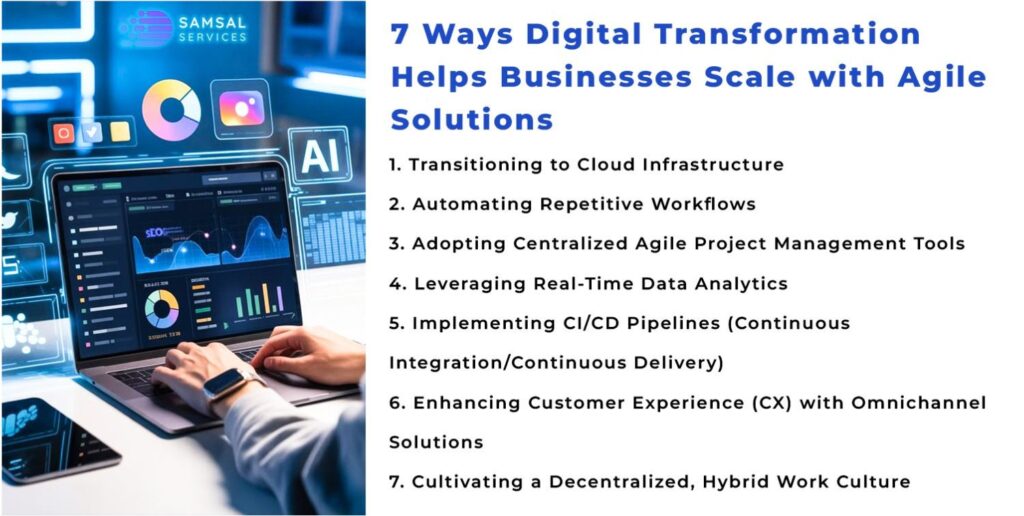
Today’s business landscape is evolving faster than ever. Companies that fail to adapt to changing customer expectations, emerging technologies, and competitive pressures often struggle to keep pace. This is where digital transformation scale agile solutions become a game-changer.
Digital transformation is no longer limited to adopting new software or migrating data to the cloud. It is about rethinking business operations, customer experiences, and organizational processes using technology and agile methodologies to achieve sustainable growth.
Businesses of every size, from startups to enterprises, are embracing agile solutions because they allow organizations to respond quickly to market changes, improve collaboration, reduce operational costs, and deliver greater customer value.
What Is Digital Transformation?
Digital transformation is the process of integrating digital technologies into every area of a business. It fundamentally changes how organizations operate, deliver services, and create value for customers.
Rather than simply replacing manual processes with digital ones, digital transformation involves:
- Modernizing business operations
- Improving customer experiences
- Automating repetitive tasks
- Using real-time data for decision-making
- Creating scalable digital infrastructure
When combined with agile methodologies, businesses gain the flexibility needed to evolve continuously instead of making massive changes every few years.
Understanding Agile Solutions in Modern Businesses
Agile solutions refer to a flexible approach to software development, project management, and business operations. Instead of following rigid long-term plans, agile focuses on continuous improvement through shorter development cycles, regular feedback, and rapid adaptation.
Agile helps organizations:
- Deliver products faster
- Reduce development risks
- Improve collaboration
- Respond quickly to customer needs
- Encourage innovation
Together, digital transformation scale agile solutions create a business environment where growth becomes sustainable rather than reactive.
Why Businesses Need Digital Transformation Today
Consumer expectations continue to rise. Customers now expect seamless digital experiences, instant support, personalized services, and secure online interactions.
Businesses relying on outdated systems often face:
- Slow operations
- High maintenance costs
- Limited scalability
- Poor customer experiences
- Inefficient workflows
Digital transformation enables organizations to modernize these systems while agile practices ensure continuous optimization.
1. Accelerates Business Growth Through Flexible Infrastructure
One of the biggest advantages of digital transformation scale agile solutions, is the ability to grow without rebuilding business systems from scratch.
Cloud computing, scalable applications, and modular software architectures allow businesses to:
Easily Expand Operations
Companies can add new products, services, or locations without major infrastructure investments.
2. Improves Operational Efficiency Through Automation
Many organizations lose valuable time performing repetitive manual tasks.
Digital transformation introduces intelligent automation that streamlines everyday operations.
Automating Routine Processes
Businesses can automate:
- Invoice generation
- Inventory management
- Employee onboarding
- Customer support
- Report generation
- Reducing Human Errors
Automation minimizes mistakes caused by manual data entry while improving accuracy across departments.
Increasing Employee Productivity
Employees spend less time on repetitive work and more time focusing on innovation, customer service, and strategic planning.
The combination of automation and agile improvements creates highly efficient business operations.
3. Enhances Customer Experience Across Every Touchpoint
Businesses using digital transformation scale agile solutions can continuously improve how customers interact with their brand.
AI and customer analytics help businesses deliver personalized recommendations, offers, and communication.
4. Enables Faster Decision-Making with Real-Time Data
Modern businesses generate enormous amounts of data daily.
Without proper digital systems, valuable insights often remain hidden.
Centralized Business Intelligence
Digital platforms consolidate information from:
- Sales
- Marketing
- Finance
- Operations
- Customer service
- Real-Time Reporting
Executives gain instant access to dashboards that support faster business decisions.
5. Increases Collaboration Across Teams
As organizations expand, effective communication becomes increasingly important. Agile digital workplaces enhance collaboration by connecting teams across locations through cloud-based collaboration platforms.
Teams can securely share:
- Documents
- Projects
- Reports
- Workflows
- Agile Project Management
Teams work in short development cycles with frequent communication, ensuring everyone remains aligned.
Better Cross-Department Coordination
Marketing, sales, finance, operations, and development teams collaborate more effectively using integrated digital platforms.
Improved collaboration leads to faster execution and stronger business outcomes.
6. Supports Continuous Innovation
Innovation is no longer optional.
Businesses that continuously improve products and services remain competitive in rapidly changing industries.
Faster Product Development
Agile methodologies allow businesses to launch minimum viable products (MVPs), collect customer feedback, and improve continuously.
Experiment Without Major Risks
Organizations can test new features before full deployment, reducing financial and operational risks.
Adapt Quickly to Market Changes
Rather than waiting months for large software releases, agile teams deliver incremental improvements that keep businesses competitive.
7. Strengthens Security and Business Resilience
As businesses grow, cybersecurity becomes increasingly important. Modern digital transformation embeds security from the start, using advanced measures like multi-factor authentication (MFA) to protect sensitive data, reduce risks, and strengthen overall business resilience.
- Data encryption
- Continuous monitoring
- Threat detection
- Secure cloud environments
- Business Continuity
Cloud backups and disaster recovery systems ensure operations continue during unexpected disruptions.
Compliance Management
Strong digital platforms streamline regulatory compliance through secure, accurate record management while strengthening business resilience. Achieving lasting digital transformation requires an experienced technology partner who aligns innovative solutions with your strategic business goals.
Resistance to Change
Employees may hesitate to adopt new technologies without proper communication and training.
Legacy Systems
Older software may require phased modernization instead of immediate replacement.
Budget Constraints
Organizations should prioritize high-impact projects that generate measurable returns.
Skills Gaps
Partnering with a leading IT agency in the USA helps businesses access specialized expertise while reducing implementation risks.
Frequently Asked Questions
1. What does digital transformation mean for business growth?
Digital transformation integrates technology into business operations to improve efficiency, customer experience, scalability, and innovation. Combined with agile practices, it helps organizations grow faster while adapting to market changes.
2. How do agile solutions support business scalability?
Agile solutions enable businesses to develop, test, and improve products continuously. This flexibility allows organizations to respond quickly to customer demands, reduce project risks, and scale operations efficiently.
3. Why is cloud technology important for digital transformation?
Cloud technology provides scalable infrastructure, improved collaboration, enhanced security, and lower operational costs. It enables businesses to expand without investing heavily in physical hardware.
4. Why should businesses work with a leading IT agency in the USA?
A leading IT agency in the USA offers strategic planning, custom software development, cloud migration, cybersecurity expertise, agile implementation, and ongoing support to ensure successful digital transformation and long-term business growth.
Conclusion:
Businesses that embrace digital transformation scale agile solutions position themselves for long-term success in an increasingly competitive marketplace. By combining modern technologies with agile methodologies, organizations can streamline operations, improve customer experiences, strengthen collaboration, and respond quickly to evolving market demands.
From scalable cloud infrastructure and intelligent automation to real-time analytics and continuous innovation, digital transformation empowers companies to grow efficiently without sacrificing flexibility.
Partnering with a leading IT agency in the USA can accelerate your transformation journey by providing the expertise needed to modernize systems, implement agile practices, and build scalable digital solutions tailored to your business goals.