Manufacturing companies operate in competitive markets where product quality, operational efficiency, and customer relationships influence business success. However, producing reliable products is only one part of building a successful manufacturing business. Companies must also communicate their value, establish credibility, and differentiate themselves from competitors. This is where a strong brand becomes essential.
A well-developed brand helps manufacturers explain what makes their products different, why customers should trust their capabilities, and how their business meets industry requirements. Whether a company manufactures industrial equipment, automotive components, construction materials, packaging, or specialized machinery, consistent branding can improve its market position and strengthen relationships with distributors, suppliers, and buyers.
Professional branding services for manufacturing companies help businesses create a recognizable identity that reflects their expertise, quality standards, and long-term goals. These services can include brand strategy, logo design, website development, messaging, visual identity, and digital marketing.
Why Is Branding Important for Manufacturing Companies?
Manufacturing is often a relationship-driven industry. Buyers may evaluate several suppliers offering similar products, technical specifications, and pricing. In these situations, a recognizable and trustworthy brand can influence purchasing decisions. Branding communicates more than a company’s name or logo. It represents its reputation, manufacturing standards, customer service, technical capabilities, and commitment to delivering consistent results.
For example, a manufacturer that clearly communicates its quality assurance processes, industry certifications, production capabilities, and delivery standards can give potential buyers stronger reasons to consider its services.
A consistent brand also supports business development. When the same visual identity and messaging appear across a company’s website, product catalogs, trade show displays, proposals, and sales materials, customers can more easily recognize and remember the business.
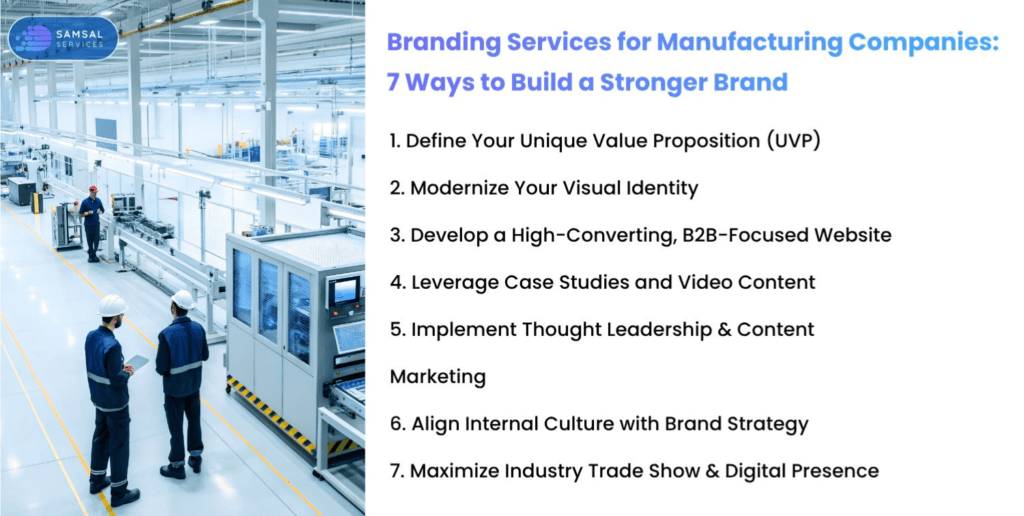
7 Ways Branding Services for Manufacturing Companies Build a Stronger Brand
1. Develop a Distinctive Brand Identity
A strong brand identity helps manufacturing businesses stand out in crowded markets. Many manufacturers compete on similar product features, pricing, and delivery timelines. Without a clear identity, customers may struggle to understand why one supplier is different from another.
Professional branding services begin by identifying a company’s strengths, target customers, competitive advantages, and business objectives. This information helps shape an identity that reflects the manufacturer’s actual capabilities.
A complete manufacturing brand identity may include a professional logo, typography, color palette, product presentation, and consistent visual guidelines. These elements should work together across digital and offline materials.
For instance, a precision engineering company might emphasize technical expertise, accuracy, and reliability through its visual identity and messaging. A sustainable packaging manufacturer might focus on material innovation, responsible production, and environmental performance.
2. Build Trust Through Consistent Brand Messaging
Trust is a major consideration in manufacturing purchases. Business buyers often need confidence that a supplier can meet technical requirements, maintain quality standards, and deliver products according to agreed specifications. Brand messaging helps manufacturers communicate these strengths clearly.
A professional branding strategy establishes the key messages a company should consistently communicate. These may include production expertise, quality control procedures, customization capabilities, industry experience, and customer support.
For example, a company can explain its inspection procedures, describe its manufacturing equipment, present relevant certifications, or share verified customer success stories. These details provide practical evidence of its capabilities.
The same messaging should appear throughout the company’s website, product brochures, sales presentations, and digital campaigns. Consistency reduces confusion and helps customers develop a clearer understanding of the business.
3. Strengthen Your Digital Presence With a Professional Website
A manufacturing company’s website often serves as the first point of contact for potential buyers. Before requesting a quotation or contacting a sales representative, customers may research product specifications, production capabilities, certifications, and company experience online. A professional website should make this information easy to find.
Branding services for manufacturing companies can include website design, user experience improvements, product page development, and content organization. These elements help create a consistent digital experience that reflects the manufacturer’s identity.
An effective manufacturing website should include:
- Clear descriptions of products and manufacturing services.
- Dedicated pages for industries, applications, and product categories.
- Company information, certifications, and quality standards.
- Technical documentation, downloadable catalogs, or product specifications where appropriate.
- Simple contact forms and quotation request options.
Search engine optimization also plays an important role. Optimized service pages, descriptive headings, relevant keywords, useful content, and technically sound website performance can help prospective buyers discover the company through search engines.
For example, a manufacturer targeting industrial equipment buyers can create dedicated pages describing its equipment, customization options, and supported industries instead of relying on a single general product page.
4. Differentiate Your Manufacturing Business From Competitors
Manufacturing companies often compete against suppliers with comparable products and technical capabilities. A strong brand helps explain why buyers should choose one company over another.
The first step is understanding the competitive landscape. Manufacturers should evaluate competitors’ product positioning, service offerings, messaging, customer experience, and visual identity. This analysis can reveal opportunities to communicate a more distinctive value proposition.
For example, one manufacturer may specialize in short production runs and customized components, while another focuses on large-volume manufacturing and dependable delivery schedules. Both can build strong brands by emphasizing the advantages most relevant to their target customers.
Brand differentiation may focus on:
- Specialized industry knowledge.
- Flexible production and customization.
- Reliable communication and customer support.
- Advanced manufacturing technology.
- Quality assurance and traceability.
- Sustainable production practices, where supported by evidence.
The strongest positioning is based on genuine business strengths rather than exaggerated promises.
5. Use Digital Marketing to Expand Brand Visibility
Even a well-designed brand needs visibility to reach the right audience. Manufacturing companies can use digital marketing to connect with procurement managers, engineers, distributors, wholesalers, and other decision-makers. For example, an industrial packaging equipment manufacturer could publish content on packaging efficiency, maintenance, production capacity, and equipment selection. Case studies, with customer permission, can further demonstrate expertise by showing the problem addressed, solution delivered, and measurable results. Branding and digital marketing should align across advertising, the website, and sales conversations.
6. Align Branding With Digital Transformation and Agile Growth
Manufacturing businesses are increasingly adopting digital tools to improve production planning, inventory management, customer communication, and operational visibility. These investments can improve efficiency, but their business value also depends on how effectively the company communicates its capabilities to the market.
A digital transformation at scale agile solution can help an organization coordinate technology adoption, business priorities, and cross-functional workflows through a more structured and adaptable approach.
Agile practices can help teams introduce improvements incrementally, evaluate results, and adjust priorities as business requirements change.
Branding should evolve alongside these improvements.
For example, a manufacturer implementing real-time order tracking may strengthen its brand positioning around transparency and customer experience. A business introducing advanced production analytics may communicate its commitment to operational precision and data-informed decision-making.
These messages should reflect capabilities that customers can actually experience.
To align branding with digital transformation, manufacturers can:
- Define how new technology improves customer value.
- Coordinate messaging between marketing, sales, and operations teams.
- Update website content to reflect current capabilities.
- Use customer feedback and performance data to refine positioning.
- Review brand messaging as products, services, and business priorities evolve.
A digital transformation scale agile solution is not a branding service itself. Rather, it can support the organizational changes that enable a manufacturer to deliver on its brand promise more consistently.
7. Improve Customer Relationships and Support Long-Term Growth
Manufacturing relationships often extend beyond a single purchase, as customers may require replacement components, maintenance support, repeat orders, product modifications, or assistance with future projects. For example, a manufacturer that provides a straightforward quotation process, accurate documentation, responsive support, and reliable order updates reinforces a brand associated with trust and reliability.
Customer experience should also inform brand development. Feedback from existing customers can reveal the strengths that matter most, identify communication gaps, and highlight areas of the service experience that need improvement. Manufacturers can collect this insight through customer surveys, account reviews, sales team feedback, and post-project evaluations. Satisfied customers may become repeat buyers, recommend the business to industry contacts, or participate in case studies that demonstrate its capabilities.
Frequently Asked Questions (FAQs)
1. What are branding services for manufacturing companies?
Branding services for manufacturing companies help businesses establish a recognizable identity and communicate their value to customers. They may include brand strategy, logo design, visual identity, messaging, website development, product catalogs, and digital marketing.
2. Why is branding important for industrial and manufacturing businesses?
Branding helps manufacturing companies communicate their strengths in competitive markets. A clear and consistent brand can improve recognition, reinforce trust, and make it easier for buyers to understand a supplier’s capabilities
3. How can a manufacturing company improve its online brand presence?
Manufacturers can improve their online presence by developing a professional website, optimizing product and service pages for search engines, publishing useful industry content, and maintaining consistent branding across digital channels.
4. How does digital transformation support manufacturing brand growth?
Digital transformation can improve the processes and customer experiences behind a manufacturer’s brand promise. Modern ERP and CRM systems, improved reporting, and connected workflows can support better coordination and communication.
Conclusion
A strong brand helps manufacturing companies communicate their expertise, establish credibility, and differentiate their products and services in competitive markets. From developing a distinctive identity to improving website performance and building stronger customer relationships, branding supports several aspects of business growth.
Investing in professional branding services for manufacturing companies allows businesses to present their capabilities more clearly and deliver a consistent experience across digital and offline channels. When branding is supported by useful content, targeted digital marketing, and a customer-focused website, it can also help generate relevant business inquiries and strengthen market visibility.
Manufacturers should also consider how their brand reflects their operational development. Integrating brand strategy with digital initiatives and a digital transformation-scale agile solution can help align customer messaging with evolving business capabilities.