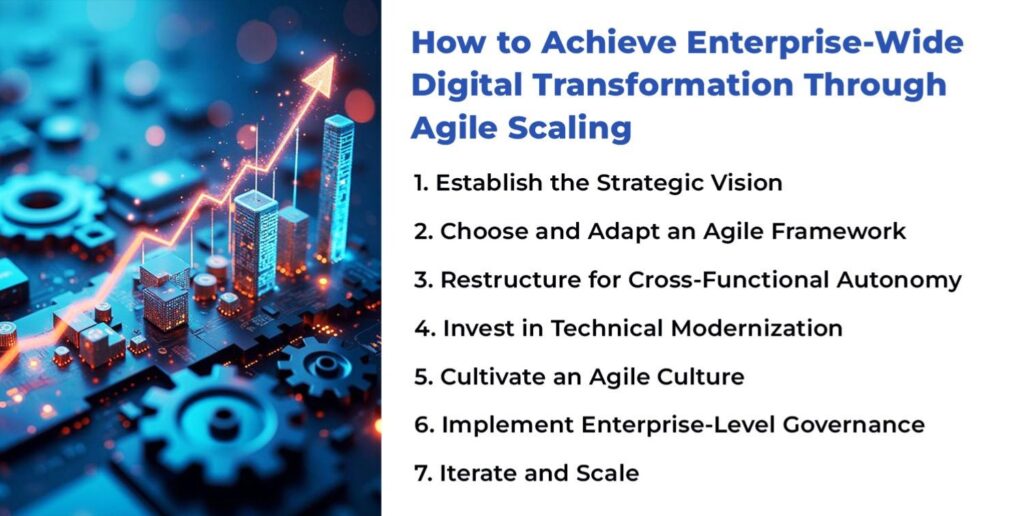
Digital transformation has become a necessity rather than an option for modern enterprises. Organizations across industries are investing heavily in technology to improve customer experiences, streamline operations, and stay competitive. However, many companies struggle to scale their transformation initiatives beyond individual departments or pilot projects.
This is where digital transformation scale agile solutions play a critical role. Agile scaling enables businesses to align teams, processes, and technology across the enterprise while maintaining flexibility and speed. By implementing scalable Agile frameworks and leveraging the expertise of a trusted IT agency in the USA, organizations can achieve sustainable transformation and long-term success.
Quick Answer: How Does Agile Scaling Support Enterprise Digital Transformation?
Agile scaling helps organizations expand Agile principles beyond individual teams and apply them across departments, business units, and enterprise-wide initiatives. This approach improves collaboration, accelerates innovation, enhances customer value delivery, and ensures technology investments align with strategic business goals.
Why Enterprise-Wide Digital Transformation Matters
Digital transformation is more than adopting new technologies. It involves rethinking business processes, organizational culture, and customer engagement strategies.
The Challenges Enterprises Face
Many organizations encounter obstacles such as:
- Departmental silos
- Resistance to change
- Legacy technology systems
- Slow decision-making processes
- Misaligned business objectives
Without a structured approach, digital initiatives often fail to achieve their intended outcomes.
The Need for Agile Scaling
Traditional project management methods often struggle to keep pace with rapidly changing business environments. Agile scaling provides a framework for managing complex transformation programs while maintaining flexibility and responsiveness.
Understanding Agile Scaling in Enterprise Environments
Agile scaling extends Agile practices from individual teams to larger organizational structures.
What Is Agile Scaling?
Agile scaling is the process of coordinating multiple Agile teams working toward common business objectives while maintaining alignment across the organization.
Popular frameworks include:
- SAFe (Scaled Agile Framework)
- Scrum@Scale
- Large-Scale Scrum (LeSS)
- Disciplined Agile
Each framework provides methodologies for managing large-scale projects while preserving Agile principles.
Benefits of Agile Scaling
When implemented effectively, Agile scaling offers:
- Faster product delivery
- Improved collaboration
- Greater transparency
- Enhanced customer satisfaction
- Better risk management
- Increased operational efficiency
These benefits directly support enterprise-wide digital transformation initiatives.
Step 1: Establish a Clear Digital Transformation Vision
Successful transformation starts with a well-defined vision.
Align Technology with Business Goals
Organizations must identify:
- Desired business outcomes
- Customer experience improvements
- Operational efficiency targets
- Revenue growth opportunities
Technology investments should support measurable business objectives.
Secure Executive Leadership Support
Transformation initiatives require strong leadership commitment.
Executives should:
- Communicate the transformation vision
- Allocate necessary resources
- Remove organizational barriers
- Promote Agile adoption
Leadership support is often one of the most important factors in successful transformation programs.
Step 2: Build a Transformation-Ready Culture
Technology alone cannot drive transformation.
Foster an Agile Mindset
Employees should embrace:
- Continuous improvement
- Collaboration
- Experimentation
- Customer-centric thinking
An Agile culture empowers teams to adapt quickly and innovate effectively.
Encourage Cross-Functional Collaboration
Digital transformation often requires cooperation between:
- IT teams
- Marketing departments
- Sales teams
- Operations groups
- Customer service units
Breaking down silos improves communication and accelerates project delivery.
Step 3: Implement Digital Transformation Scale Agile Solutions
A structured Agile scaling strategy helps enterprises coordinate large-scale initiatives.
Standardize Agile Practices
Consistency across teams improves efficiency and governance.
Organizations should establish:
- Common workflows
- Shared metrics
- Unified planning processes
- Standard reporting structures
This creates alignment while preserving team autonomy.
Scale Agile Across Departments
Digital transformation impacts multiple business areas.
Agile methodologies should be extended to:
- Product development
- Customer experience initiatives
- Process improvement projects
- Technology modernization programs
This enterprise-wide approach ensures transformation efforts remain coordinated.
Step 4: Modernize Technology Infrastructure
Legacy systems often limit transformation efforts.
Invest in Cloud Technologies
Cloud platforms provide:
- Scalability
- Flexibility
- Cost efficiency
- Faster deployment capabilities
Cloud adoption supports Agile delivery by enabling rapid experimentation and innovation.
Leverage Automation
Automation reduces repetitive tasks and improves productivity.
Examples include:
- Workflow automation
- Automated testing
- Continuous integration and deployment
- AI-powered analytics
Automation allows teams to focus on strategic initiatives rather than manual processes.
Step 5: Prioritize Customer-Centric Innovation
Digital transformation should create value for customers.
Use Data to Understand Customer Needs
Organizations can leverage:
- Customer feedback
- Behavioral analytics
- Market research
- User experience testing
Data-driven insights help prioritize high-impact improvements.
Deliver Incremental Value
Agile methodologies encourage continuous delivery rather than waiting for large project completions.
This enables organizations to:
- Respond to customer feedback quickly
- Reduce development risks
- Accelerate innovation cycles
Step 6: Measure Progress with Meaningful Metrics
Transformation success requires ongoing evaluation.
Key Performance Indicators to Track
Important metrics include:
- Customer satisfaction scores
- Time-to-market improvements
- Employee engagement levels
- Operational efficiency gains
- Revenue growth from digital initiatives
These measurements provide visibility into transformation outcomes.
Continuously Improve Processes
Agile scaling encourages regular reviews and retrospectives.
Organizations should:
- Analyze performance data
- Identify bottlenecks
- Adjust strategies as needed
- Share lessons learned across teams
Continuous improvement ensures long-term success.
The Role of a Trusted IT Agency in the USA
Many enterprises partner with external experts to accelerate transformation efforts.
Why Businesses Choose IT Consulting Partners
A trusted IT agency in the USA can provide:
- Strategic guidance
- Agile implementation expertise
- Technology modernization support
- Change management assistance
- Ongoing optimization services
These capabilities help organizations avoid common transformation pitfalls.
Accelerating Transformation Outcomes
Experienced technology partners bring proven methodologies, industry best practices, and specialized expertise that can significantly reduce implementation risks and improve project success rates.
Common Mistakes to Avoid During Agile Scaling
Scaling Too Quickly
Organizations should avoid expanding Agile practices before teams fully understand Agile principles.
Ignoring Organizational Culture
Technology changes without cultural transformation often lead to poor adoption rates.
Lack of Executive Involvement
Leadership disengagement can create uncertainty and hinder progress.
Measuring the Wrong Metrics
Focusing solely on activity metrics instead of business outcomes may obscure actual transformation success.
Future Trends in Digital Transformation and Agile Scaling
As technology evolves, enterprises will continue adopting:
Artificial Intelligence Integration
AI will support:
- Predictive analytics
- Intelligent automation
- Personalized customer experiences
Hyperautomation
Organizations will automate increasingly complex business processes.
Data-Driven Decision Making
Real-time analytics will become central to enterprise strategy and operational planning.
Agile Business Operations
Agile principles will expand beyond IT and software development into every aspect of business operations.
Frequently Asked Questions (FAQs)
1. What are digital transformation scale agile solutions?
Digital transformation scale agile solutions are frameworks, methodologies, and technologies that help organizations implement Agile practices across the enterprise while supporting large-scale digital transformation initiatives.
2. Why is Agile scaling important for large enterprises?
Agile scaling enables multiple teams and departments to work collaboratively toward common goals, improving efficiency, innovation, and customer value delivery.
3. Which Agile scaling framework is best for enterprise transformation?
Popular options include SAFe, LeSS, Scrum@Scale, and Disciplined Agile. The best choice depends on organizational size, goals, and complexity.
4. How can a trusted IT agency in the USA support digital transformation?
A trusted IT agency in the USA can provide strategic planning, Agile implementation expertise, technology modernization services, and ongoing support to ensure successful transformation outcomes.
Conclusion
Enterprise-wide digital transformation requires more than adopting new technologies. It demands organizational alignment, cultural change, modern infrastructure, and a scalable operating model that supports continuous innovation.By implementing digital transformation scale agile solutions, organizations can break down silos, improve collaboration, accelerate delivery, and create sustainable competitive advantages. Combined with the expertise of a trusted IT agency in the USA, businesses can successfully navigate complex transformation journeys and position themselves for long-term growth in an increasingly digital world.