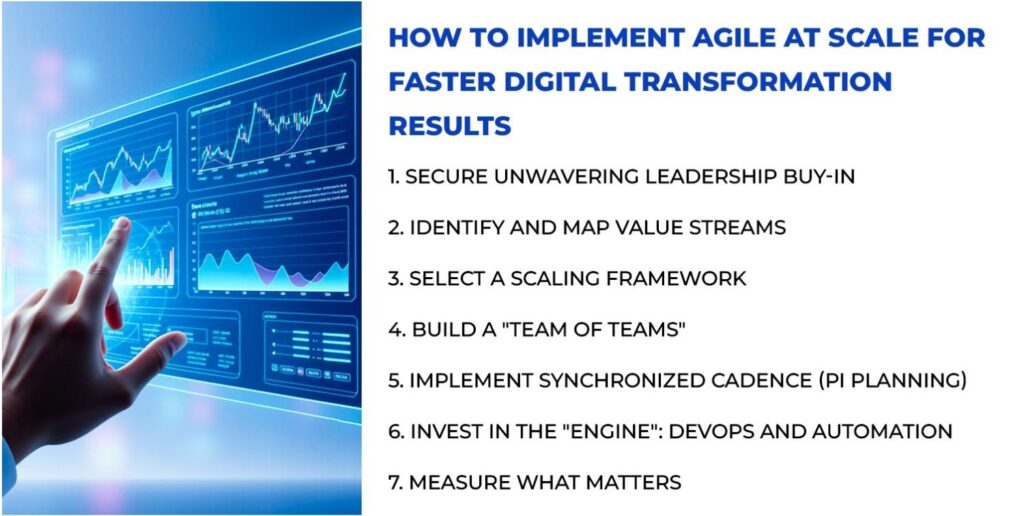
Digital transformation is no longer optional for modern businesses. Organizations across industries are investing heavily in technology, automation, cloud systems, artificial intelligence, and customer-centric platforms to remain competitive. However, many businesses struggle to achieve fast and sustainable results because traditional workflows cannot keep pace with changing market demands.
This is where agile at scale becomes essential. Agile methodologies help businesses improve flexibility, accelerate delivery cycles, and encourage collaboration across departments. When implemented correctly, digital transformation scale agile solutions allow enterprises to innovate faster, reduce operational bottlenecks, and improve customer satisfaction.
Today’s business environment requires companies to adapt quickly while maintaining efficiency and consistency. Scaling agile practices across the organization creates a structured approach that aligns teams, leadership, and technology initiatives toward common business goals.
Why Agile at Scale Matters in Digital Transformation
Digital transformation projects often fail because organizations attempt to modernize technology without changing their operational mindset. Traditional management structures, rigid workflows, and disconnected departments slow innovation and create resistance to change.
Agile at scale helps organizations overcome these challenges by creating adaptable processes that encourage continuous improvement and faster decision-making.
Benefits of Scaling Agile Across the Organization
Faster Product Delivery
Agile teams work in short development cycles called sprints, which help businesses release updates, products, and features more quickly. This allows organizations to respond faster to customer demands and market trends.
Improved Cross-Team Collaboration
Scaling agile encourages communication between departments such as development, marketing, sales, operations, and customer support. Better collaboration leads to smoother project execution and fewer delays.
Enhanced Customer Experience
Agile methodologies focus heavily on customer feedback and continuous improvement. Businesses can identify user pain points earlier and implement improvements more efficiently.
Better Risk Management
Large digital transformation projects often involve significant risks. Agile frameworks reduce risk by breaking projects into manageable phases with continuous testing and optimization.
Increased Operational Flexibility
Businesses that adopt digital transformation scale agile solutions can quickly adapt to industry changes, customer behavior shifts, and technological advancements.
Understanding Agile Frameworks for Enterprise Transformation
Before implementing agile at scale, organizations must understand which framework best fits their business structure and operational goals.
Popular Agile Scaling Frameworks
SAFe (Scaled Agile Framework)
SAFe is one of the most widely used enterprise agile frameworks. It helps large organizations align teams, leadership, and workflows across multiple departments.
Key features include:
- Strategic planning alignment
- Coordinated agile release trains
- Lean portfolio management
- Enterprise-wide collaboration
Scrum@Scale
Scrum@Scale expands traditional Scrum methodologies across multiple teams while maintaining flexibility and speed.
This framework works best for organizations that already use Scrum and want to scale operations gradually.
Large-Scale Scrum:
Less focuses on simplicity by extending Scrum principles across large enterprises without adding excessive complexity.
It emphasizes:
- Shared goals
- Transparent communication
- Minimal management layers
- Continuous improvement
Spotify Model
The Spotify model uses squads, tribes, chapters, and guilds to create highly autonomous teams while maintaining organizational alignment.
This framework encourages innovation and rapid experimentation.
Steps to Implement Agile at Scale Successfully
Scaling agile requires more than simply adopting new software tools or holding daily meetings. Businesses must create a culture that supports adaptability, collaboration, and continuous learning.
Define Clear Digital Transformation Goals
Organizations should first identify the primary objectives of their digital transformation initiatives.
Common Goals Include:
- Improving operational efficiency
- Increasing customer engagement
- Accelerating product development
- Reducing costs
- Enhancing data-driven decision-making
Clear goals help leadership align agile practices with business outcomes.
Build Leadership Support and Commitment
Leadership involvement is critical for agile transformation success. Executives must actively support organizational changes and encourage collaboration across teams.
Leadership Responsibilities Include:
- Removing operational barriers
- Supporting agile training programs
- Encouraging innovation
- Promoting transparent communication
- Investing in modern technology solutions
Without executive buy-in, agile transformation efforts often fail to scale effectively.
Create Cross-Functional Agile Teams
Cross-functional teams combine employees from different departments to improve communication and project execution.
Teams May Include:
- Developers
- Designers
- Marketing specialists
- Data analysts
- Product managers
- Customer support representatives
This structure reduces silos and improves collaboration throughout the transformation process.
Invest in Agile Training and Coaching
Employees and managers must understand agile principles before implementing them across the organization.
Important Training Areas
Agile Methodologies
Teach teams how Scrum, Kanban, SAFe, or other frameworks operate.
Collaboration Techniques
Encourage better communication and shared accountability.
Agile Leadership
Train managers to support self-organizing teams instead of relying on rigid hierarchical structures.
Professional coaching can help organizations avoid common implementation mistakes.
Modernize Technology Infrastructure
Digital transformation requires scalable and flexible technology systems.
Essential Technology Investments
Cloud Computing
Cloud platforms improve scalability, accessibility, and collaboration.
Automation Tools
Automation reduces repetitive tasks and improves operational efficiency.
Data Analytics Platforms
Real-time analytics help organizations make faster and more informed decisions.
Collaboration Software
Digital collaboration tools improve communication between distributed teams.
Businesses implementing digital transformation scale agile solutions often prioritize cloud-based ecosystems to support long-term scalability.
Align Agile with Business Strategy
Agile transformation should directly support overall business objectives rather than operate independently.
How to Align Agile with Organizational Goals
Set Measurable KPIs
Track progress using clear performance indicators such as:
- Time-to-market
- Customer satisfaction
- Revenue growth
- Productivity improvements
- Employee engagement
Focus on Customer-Centric Development
Customer needs should remain central to every agile initiative.
Prioritize High-Value Projects
Organizations should allocate resources to projects that deliver the greatest business impact.
Strategic alignment ensures agile transformation efforts generate measurable business value.
Common Challenges in Scaling Agile
Although agile provides numerous benefits, organizations often face obstacles during implementation.
Resistance to Organizational Change
Employees accustomed to traditional workflows may resist agile practices.
Solution
Provide continuous communication, training, and leadership support to ease the transition.
Lack of Collaboration Between Departments
Disconnected teams can slow agile adoption.
Solution
Encourage cross-functional collaboration and shared accountability across departments.
Inconsistent Agile Practices
Different teams may apply agile methodologies inconsistently.
Solution
Establish standardized processes while maintaining enough flexibility for team autonomy.
Limited Technology Integration
Outdated systems can hinder digital transformation efforts.
Solution
Invest in scalable digital infrastructure and modern integration platforms.
The Role of Marketing in Agile Digital Transformation
Marketing departments play an increasingly important role in enterprise digital transformation strategies.
Modern marketing teams rely heavily on data, automation, customer analytics, and rapid campaign execution. Agile methodologies help marketing departments improve campaign performance and customer engagement.
Businesses working with the best digital marketing agency in the USA often adopt agile marketing strategies to accelerate growth and improve adaptability in competitive markets.
Benefits of Agile Marketing
Faster Campaign Deployment
Marketing teams can launch and optimize campaigns more quickly.
Improved Customer Insights
Continuous testing helps identify customer preferences faster.
Better Team Collaboration
Agile marketing improves coordination between content creators, designers, developers, and analysts.
Enhanced ROI Tracking
Data-driven workflows improve marketing performance measurement.
Agile marketing becomes even more effective when integrated into broader enterprise digital transformation initiatives.
Measuring Agile Transformation Success
Organizations must continuously evaluate whether agile transformation efforts are delivering measurable improvements.
Important Metrics to Track
Delivery Speed
Measure how quickly products, updates, or services are delivered.
Customer Satisfaction
Track customer feedback, retention rates, and support performance.
Employee Productivity
Evaluate team efficiency and collaboration improvements.
Revenue Growth
Analyze whether digital transformation initiatives contribute to increased profitability.
Innovation Rate
Measure how quickly new ideas move from concept to execution.
Businesses that continuously monitor performance can optimize their digital transformation scale agile solutions more effectively over time.
Future Trends in Agile Digital Transformation
The future of agile transformation continues to evolve alongside emerging technologies and changing business models.
AI-Powered Agile Operations
Artificial intelligence is helping organizations automate workflows, improve analytics, and enhance decision-making.
Hybrid Work Environments
Remote and hybrid teams require advanced collaboration systems and flexible agile frameworks.
Hyperautomation
Businesses increasingly combine AI, machine learning, and robotic process automation to improve efficiency.
Data-Driven Decision-Making
Organizations are relying more heavily on real-time data analytics to guide agile strategies.
Companies that adapt to these trends will remain more competitive in rapidly changing markets.
Best Practices for Long-Term Agile Success
Sustainable agile transformation requires ongoing commitment and continuous optimization.
Encourage Continuous Learning
Provide employees with regular training opportunities and access to emerging industry knowledge.
Maintain Transparent Communication
Open communication improves collaboration and minimizes confusion.
Focus on Incremental Improvement
Continuous small improvements often produce better long-term results than massive organizational overhauls.
Empower Teams
Self-organizing teams tend to innovate faster and perform more effectively.
Regularly Review Processes
Organizations should continuously evaluate workflows, tools, and performance metrics.
FAQs
What are digital transformation scale agile solutions?
Digital transformation scale agile solutions refer to enterprise strategies that combine agile methodologies with digital technologies to improve operational efficiency, innovation, and business scalability.
Why is agile important for digital transformation?
Agile helps businesses adapt quickly to changing customer needs, improve collaboration, accelerate delivery cycles, and reduce risks during digital transformation initiatives.
Which agile framework is best for large enterprises?
Popular frameworks for large enterprises include SAFe, Scrum@Scale, LeSS, and the Spotify Model. The best choice depends on the organization’s size, structure, and business goals.
How can agile improve marketing performance?
Agile marketing improves campaign speed, customer targeting, collaboration, testing capabilities, and performance tracking, helping businesses achieve better ROI.
Conclusion
Implementing agile at scale is one of the most effective ways for organizations to accelerate digital transformation results. Businesses that successfully adopt agile methodologies can improve collaboration, increase innovation, reduce operational inefficiencies, and respond more effectively to market changes.
However, successful transformation requires more than simply introducing agile tools or processes. Organizations must build a culture of adaptability, invest in leadership support, modernize technology infrastructure, and align agile initiatives with broader business objectives.